What's in a Name?
The story behind "A Luminous Halo"

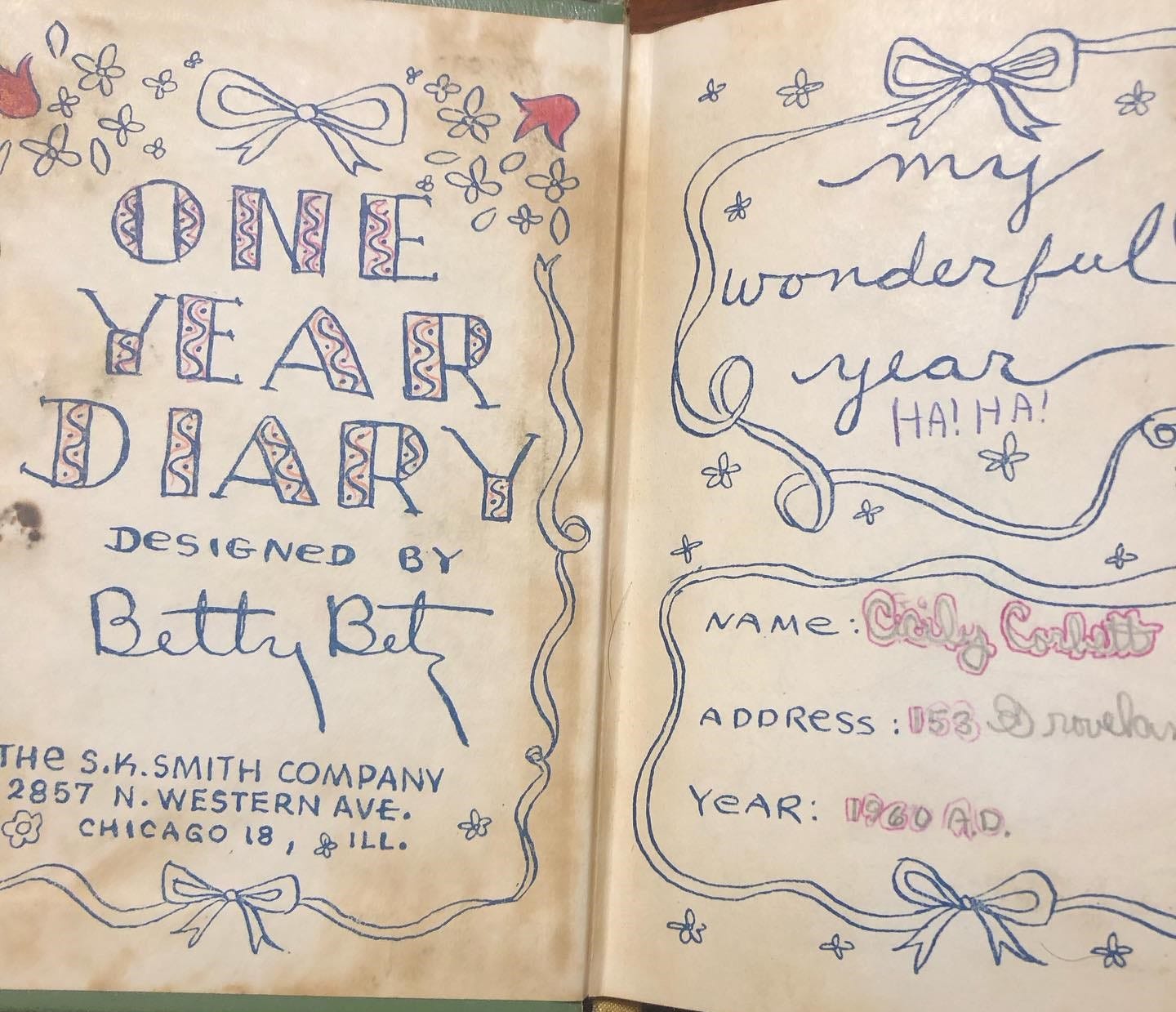
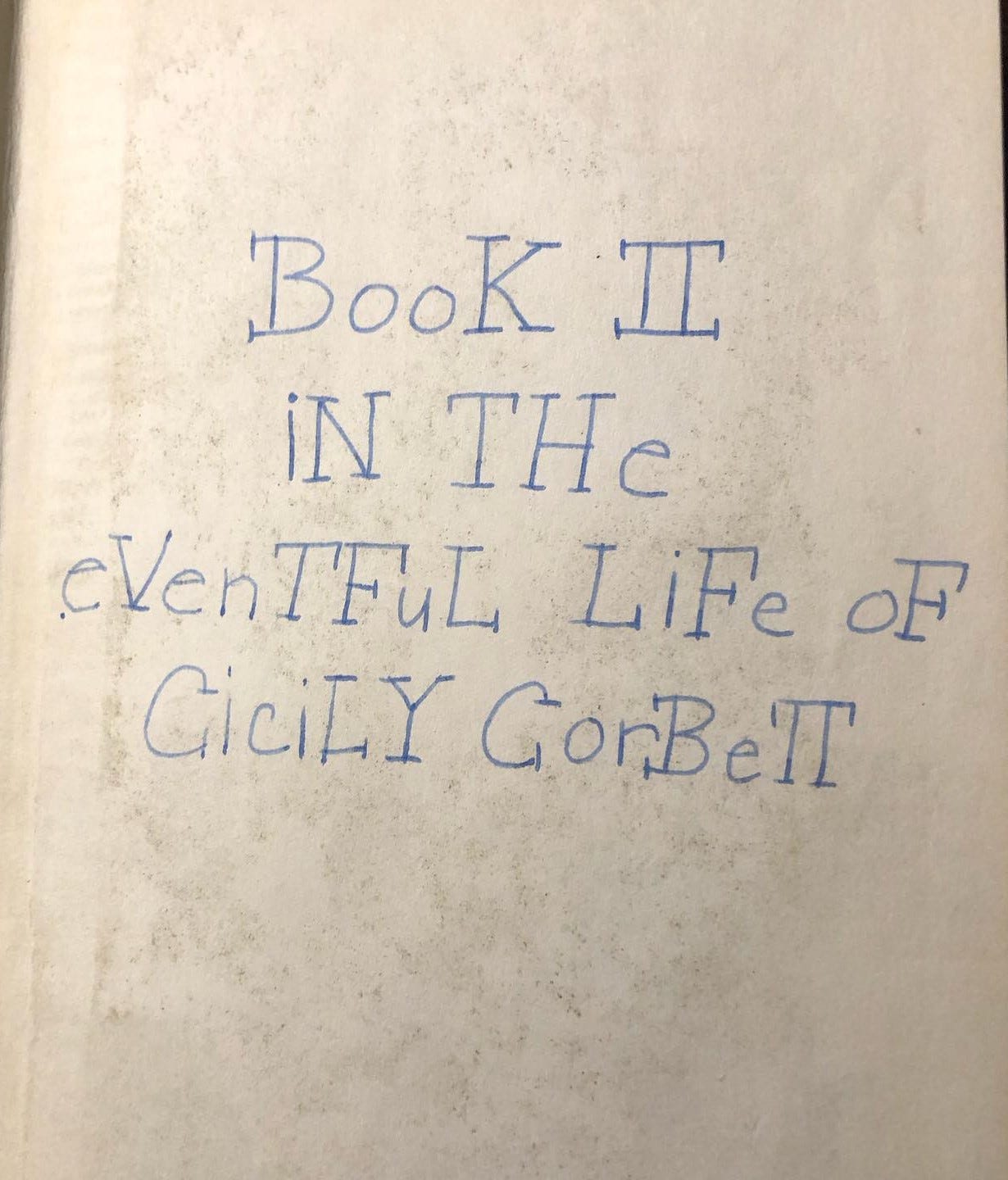
I’m pretty new to Substack, but not to writing regular features. When I was 12 years old, I kept a diary for a year, sticking pretty faithfully to a daily schedule up until I developed a crush on a boy, at which point I ripped out the too-incriminating entry about him and never wrote another word in the diary out of sheer embarassment. In high school, I began to chronicle my life again. My first diary came with a title printed on it: “my wonderful year,” to which I appended “HA! HA!” My second diary I called “The eVenTFUL LiFe oF CiciLY CorBeTT.”
In 2005, I was contracted by the Springfield, Massachusetts YMCA to write three articles, which Springfield’s The Republican newspaper had agreed to print. Both the Y and the paper liked my work and asked me to continue what became a weekly column, complete with head shot and byline. It ran for nearly seven years. I frequently profiled people: board, staff, volunteers, or members, always asking the same question: “Of all the places you could work/volunteer/work out/entrust your child, how come you chose the Y?” I called this column “Y the Y?”
Having an audience was addictive; getting paid to write wasn’t too shabby, either. I liked the Y, and even after hundreds of articles, I never repeated myself. Still, I had plenty to say on lots of other subjects as well. I queried my editor with an idea for a more personal column, which I was planning to call “Anonymous,” an allusion to the Virginia Woolf quote, “For most of history, Anonymous was a woman.”
Two problems. One, Cynthia (my editor) didn’t bite. Shaking off my disappointment, I decided to start a blog instead. I could still call it “Anonymous.”
Which brings us to the second problem. Turns out, Virginia Woolf never said that, not in exactly those words, anyway. What she did say was the far less pithy, "I would venture to guess that Anon, who wrote so many poems without signing them, was often a woman." Now everything was ruined! I didn’t want to misquote Woolf—even though everybody else did—nor did I want to be simply “Anon.”
Well, that was the bad news. The good news was, Virginia Woolf’ wrote plenty more quotable stuff. In The Common Reader (1925), for example, she gives this advice to the modern novelist:
Examine for a moment an ordinary mind on an ordinary day. The mind receives a myriad impressions — trivial, fantastic, evanescent, or engraved with the sharpness of steel. From all sides they come, an incessant shower of innumerable atoms; and as they fall, as they shape themselves into the life of Monday or Tuesday, the accent falls differently from of old; the moment of importance came not here but there; so that, if a writer were a free man and not a slave, if he could write what he chose, not what he must, if he could base his work upon his own feeling and not upon convention, there would be no plot, no comedy, no tragedy, no love interest or catastrophe in the accepted style…. Life is not a series of gig-lamps symmetrically arranged; life is a luminous halo, a semi-transparent envelope surrounding us from the beginning of consciousness to the end. Is it not the task of the novelist to convey this varying, this unknown and uncircumscribed spirit...?
So there it was, buried in that rather abstruse paragraph of literary criticism: my title! “A Luminous Halo” ...what all those trivial, fantastic, evanescent impressions received by the mind add up to. A lovely image for a conglomeration of random observations by a scatter-brained woman. I liked it so much, I kept it for this Substack. Considering my inability to limit myself to a single topic or theme, “A Luminous Halo” seems like the perfect title.
Or maybe “Squirrel!?”